Sector:
Case study
Nuclear Power
Expertise:
Heavy lifting
Heavy transport
Skidding
Benefits:
Increased safety
Optimized schedule
Location:
Germany
Steam-generator-handling system optimized for nuclear decommissioning project
Mammoet’s solutions play a key role in supporting the efficient decommissioning of nuclear power plants in Germany, which have been progressively shut down over the past decade.
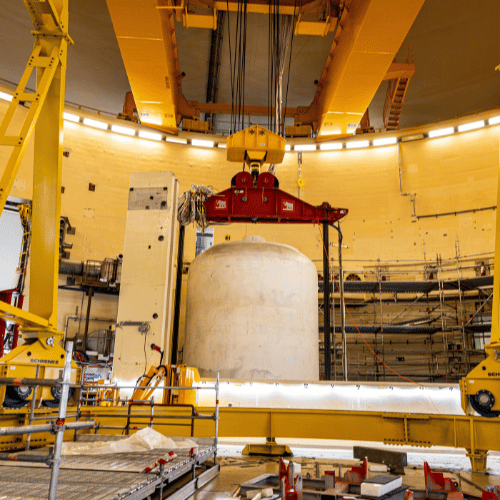
One way that Mammoet has achieved this is by engineering a tool specifically designed to perform steam generator extractions safely and efficiently: the DHS-500 (Dampferzeuger-Handling-System 500 / Steam-Generator-Handling System 500).
The DHS-500 has a lifting capacity of 500t and has previously proven its worth at the PreussenElektra-owned Unterweser nuclear power site, where it was used to efficiently extract the four steam generators.
More recently, it was used in the project carried out by Framatome to remove the four steam generators at PreussenElektra’s Grafenrheinfeld nuclear power plant. The plant was commissioned in 1981, decommissioned in 2015, and is currently being dismantled.
For the Grafenrheinfeld project, the DHS-500 had to be modified to lift the heavier steam generators and remain within the 400t lift capacity of the polar crane inside the reactor building.
Working with Framatome, Mammoet engineered ways to make the DHS-500 lighter so that it could support the polar crane to lift and tilt the heavier steam generators whole - saving the time and cost needed to dismantle them on site.
Lightening the load through re-engineering
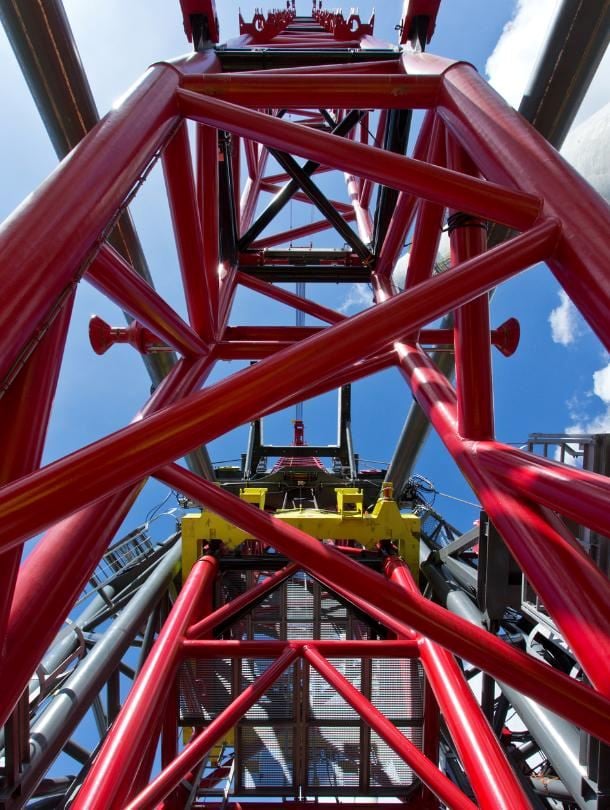
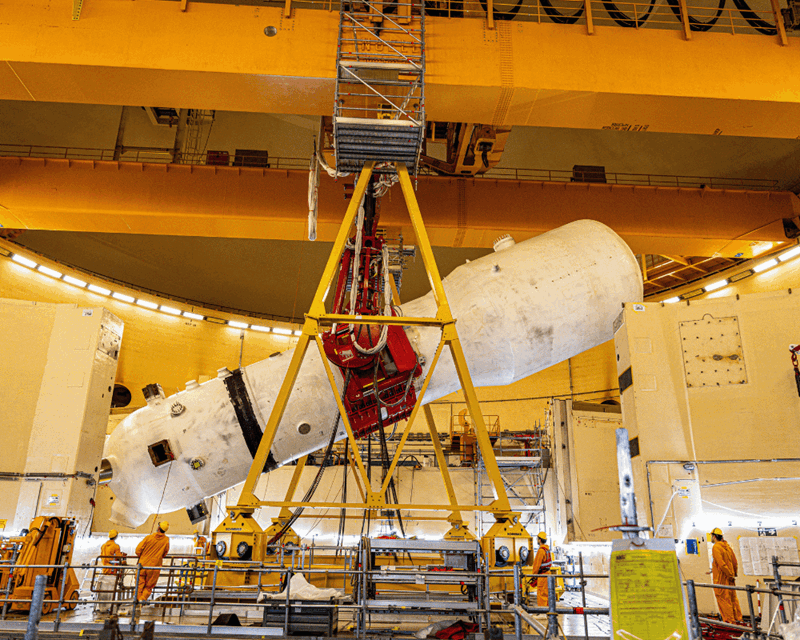
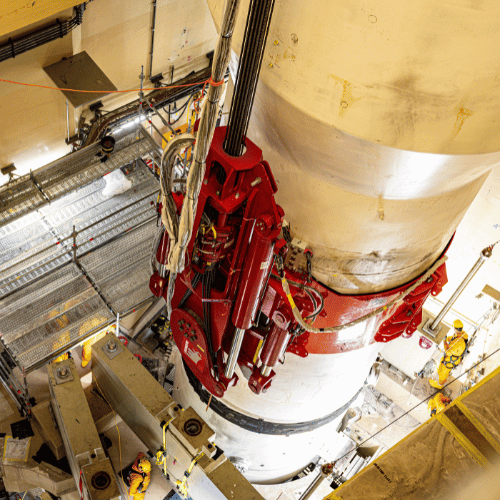
The DHS-500 has three main components. At the top is an equalizer beam that connects to the hook of the polar crane using a special adapter. From this beam hang strand jacks that connect to the hinge points of a handling ring that can clasp around a steam generator, securing it in place.
“In Unterweser, the steam generators weighed less than 300 tonnes,” explains Philipp Boettcher, Manager Engineering at Mammoet in Germany. “These were around 365 tonnes. So we had to think about ways we could reduce the weight of our DHS-500 system to stay within 400 tonnes - the lift capacity of the polar crane. By redesigning the ring that held the steam generators, we were able to reduce the weight by 20% in total.”
Mammoet achieved this in two ways: first, by fabricating the ring in high-grade steel, which is twice as strong and means you can lift the same with less material, and secondly through the load introduction method.
The original ring was larger and reached the base of the steam generator head. As the geometry of Grafenrheinfeld’s steam generators was different, the ring had to be connected in a different way. Instead, it was fastened to steel brackets on the generator’s casing, which meant less steel was needed to fabricate the ring.
Extraction of the steam generators begins
With the DHS-500 assembled inside the reactor building, each steam generator was carefully lifted to a height of six meters using the polar crane and the enhanced handling system.
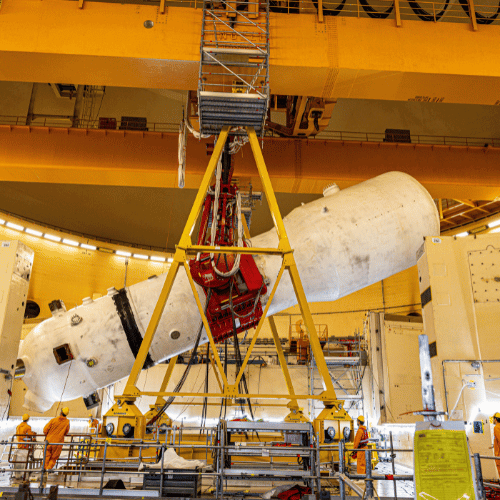
To negotiate walls and other obstacles in the confined reactor building, and to prevent the tall steam generators from colliding with the polar crane, each had to be lifted and tilted simultaneously using the strand jacks and trolley of the crane.
Adding additional challenge was the large overhead beams that supported this trolley. Due to the weight of the load, operators had to ensure that the trolley didn’t pass over the connection points that joined two beams together. Framatome also assembled two A-frames beneath the polar crane to reinforce it for the lifting operations.
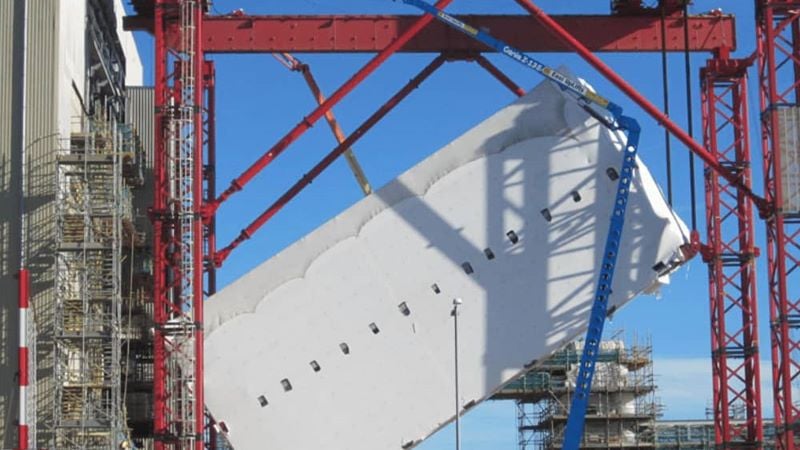
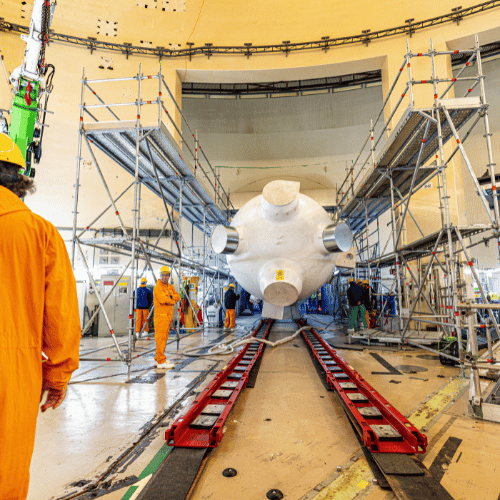
Once the steam generators were safely in a horizontal position, they were set down onto saddles and removed from the reactor building using a hydraulic skid system with a track of approximately 25 meters.
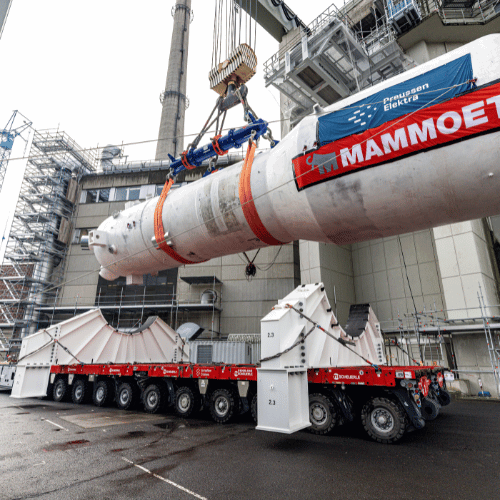
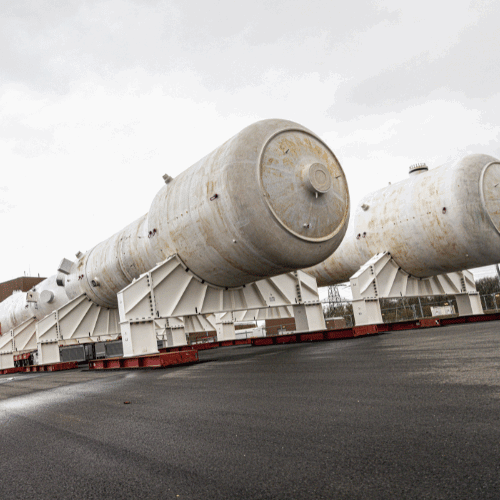
Outside, each steam generator was lifted at a height of approximately 21m from the saddles using the semi-gantry crane, lowered onto 2 x 12 axle lines of Mammoet Self-Propelled Modular Transporters (SPMTs) and then taken to the laydown area.
Precision engineering, efficient execution
It took just one week to remove each steam generator and get it to the laydown area on the power plant premises. To achieve this impressive timeline was a collaborative effort, made possible by all parties involved on site: PreussenElektra (site owner), Framatome (contractor for dismantling), Orano NCS (contractor for transport), and many smaller contractors who also played a crucial role.
When dismantling nuclear power plants, the fastest and most preferred method is to remove components in their entirety. Avoiding dismantling them in situ, can significantly shorten and speed up the timeline.
Mammoet has proven that its DHS-500 is fully optimized for supporting polar cranes to handle heavy, later generation steam generators. This enhanced version will now be used to safely and efficiently remove even more large components in the future.